Welcome To Our Website
AWD
Astronautical Web Development
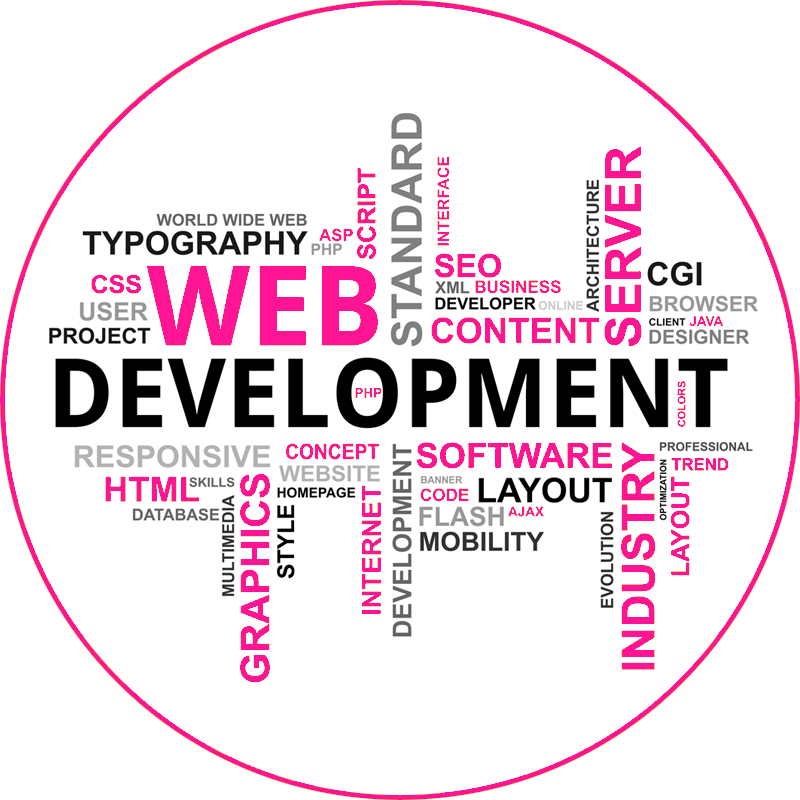
The primary purpose of this website is to offer free courses in web development for beginners. These courses are designed for students who have little or no knowledge of web development, but who have basic computer skills and knowledge, especially about using their computer's file system and file manager. Our secondary purpose is to offer online tutoring resources to those who are struggling with basic concepts. But it is our mission to ensure that learning these skills is both affordable and comprehensive. And if we happen to end up making a meager profit along the way, that would be nice too.
Web development can be divided into two main categories: front-end web development (client-based) and back-end web development (server-based). In front-end or client-based, the code is downloaded and runs on your local computer. In back-end or server-based, the code runs on the web server and only displays the results of that code on your local computer. The term full-stack web development includes both, but we believe that a solid knowledge of front-end development is required before learning back-end development.
Most of your own personal web browsing is considered front-end, except when security becomes a concern. When entering your username, password, or credit card information, your information is encrypted before being sent to the web server where it is decrypted and processed there. Then the results of that processing may or may not be encrypted before it is sent back to you.
Front-end web development is based on three languages: HTML, CSS, and JavaScript. Back-end web development builds on these languages by using a language called PHP, or Node.js. Node.js is a JavaScript runtime environment, so a basic understanding of JavaScript is required before diving too deeply into Node.js. Both PHP and Node.js are often used to interact with relational or non-relational databases. Python can also be used in back-end development.
Subjects Covered
The courses here are designed from the ground up. First, you will learn how to set up and configure your computer as a solid web development platform through our prerequisite course called Required System Tools. You will also learn how to use the best available web development tools and the ways that professional web developers use them. Next, you will learn some basic HTML through our HTML Crash Course. It is actually a very short course because HTML isn't of much use without CSS. HTML is used only to put content on a web page. How we style that content is done using CSS, which is a much longer subject. And in our CSS Coding Course, you will learn more HTML because it is often difficult to separate HTML content from its CSS styling components. JavaScript is the only programming language designed to run solely on a client's web browser environment. JavaScript is used to make web pages interactive by manipulating the DOM (document object model). The reason why that is so incredibly important is because JavaScript can change your static HTML and CSS web components and make them dynamic. Although a complete in-depth JavaScript Coding Course is currently under development here, some of the projects presented here will incorporate JavaScript code in them. When discussing front-end web development, it is almost impossible to talk about any one of these three languages without mentioning the other two.
Shortcuts
We seldom use the term web designer because you can learn to become a web designer without learning how to write code. There are programs and websites that teach you how to create a website completely from templates. Most have drag-and-drop interfaces that supposedly anyone can learn to use. Learning to use these products can take as long or longer than learning barebones web development languages. And when the web page you create doesn't match your desired vision for it, you are unable to make those desired changes because you are stuck using their interface and their obstinate rules. Everything works just fine as long as you do it their way. However, by learning the three core languages of front-end web development, you will have total control over your projects, and you will be much more knowledgeable, which makes you more desirable (and better paid) as a new hire in the web development workplace, if that is indeed one of your intended goals.
We believe that there are no shortcuts. Although you will find lots of online courses offered on the internet that make claims that they can teach you "everything you will need to know in a short period of time with little or no previous experience", we find those claims and offers often to be quite overblown and even downright false. Most courses like these are designed by people who want to make a lot of money. Our courses are designed to teach you basic skills well, and in the correct order. And while nothing worthwhile in this world is free, we believe in providing reasonably-priced services in a pay-as-you-go system, rather than robbing you up front with misleading claims and promises. Also, we will never claim to be able to teach you everything you will need to know, but we will give you a solid basic understanding so that you can expand upon your knowledge and skills through other reputable sources on your own. We also offer lists of recommended resources throughout our courses.
One Horror Story
One of our newest students had recently spent $900 on a full-stack developer course that made outlandish claims. They claimed that they would find him a job when he finished their course, or else he would be refunded 100% of the money he spent on the course. Unfortunately, this course would have been impossible to complete as designed, even by a professional full-stack web developer. Much of the course content was outdated or completely unnecessary to learn. In fact, the very first lesson was about git, which is a version-control system used by teams of developers. And while that is certainly a necessary skill to know before getting hired as a new member of a professional development team, it certainly isn't something you should learn before you even set up a useful coding environment or look at your very first line of code. He was doomed to fail. And since he would have never been able to complete the course, he was not refunded any of the money he initially spent on the course. Not everyone makes it all the way through military bootcamps. And coding bootcamps probably graduate even fewer.
Subjects Not Covered
We won't teach you WordPress, Drupal, Joomla or any other CMS (content management systems). And we won't teach you Wix or Squarespace or any of the other web-based CMS platforms either. Using CMS templates will turn you into a web designer rather than a web developer. And learning a CMS often takes just as long to learn as the basic web development languages of HTML, CSS, and JavaScript. And also, we believe that learning CMS systems makes you less desirable and paid less in a real web development workplace.
We don't teach git or GitHub. Version control is for teams of developers, not for individuals in their early learning stages. Instead, we will teach web project deployment through Netlify's easy drag-and-drop interface. We may also teach you how to upload code to your own website through FTP using FileZilla. After all, what good is a website that cannot be deployed to the internet?
We also won't teach you PHP, Node.js, Python, SQL, or anything else about back-end development including relational and non-relational databases. We will concentrate on teaching you front-end web development. We won't teach you React, but we may eventually teach you how to use APIs and some of the other JavaScript libraries.
We also won't teach you Adobe Dreamweaver. Like all products in the Adobe Creative Cloud, it is an expensive tool to use because you rent it on a monthly basis. A professional who relies on Adobe products spends about $100 per month. We will teach you about similar tools that do the same things and that are either 100% free-to-use, or are much more reasonably-priced.
Artificial Intelligence
But wait! What about AI? Yes, we have all heard that AI is "taking over" and that it will eventually replace all of the people who are currently doing our tech jobs. In fact, we see lots of downsizing and hasty layoffs now in the industry that should give us some cause to worry. And yet, please don't let management panic and reductions-in-force keep you from learning the skills you will need to become a professional web developer.
This idea that the robot overlords are now taking over, and that we will all be slaves working for them is ludicrous. While AI now gives web developers some priceless, efficient, and time-reducing new coding tools, AI chatbots lack the imaginative vision to create. In essense, people will always be required to envision end-products, and to ask the right questions in order to get the right answers that will get the job done. As with every new wave of technology, some jobs will undoubtedly be eliminated, but the key to surviving the AI Revolution will be to develop your skills to the point where you can use AI tools efficiently, and to ask the right questions to get the best answers. All web developers today use AI, but their jobs are secure as long as they learn to implement AI tools properly. We will eventually learn more about AI in the lessons to come.
One Final Welcome
Welcome once again to our website! You can begin exploring and learning on your own today. If you get stuck anywhere and decide that you have questions or need more help to get through all of this, please view our webpage entitled Tutoring Services. While nothing in this world is truly free, our help is always available to you at minimal costs.